How to Write Better Lyrics With ChatGPT (Prompt Template)
Most ChatGPT lyrics sound generic and lifeless. Here's the exact prompt template and workflow I use to get lyrics that actually connect with listeners.
Posted by
 William H. Mason
Related reading
How to Make a Halloween Parody Song
I turned Ashnikko's Working Bitch into a Halloween parody with Overdub Studio: spooky lyrics, rescore takes, a trained voice model, and comping in the DAW.
How to Change Your Voice to Match Any Singer
The full workflow I use to make my voice match any singer: sing a rough guide vocal, train a voice model, and run the full song pass in Overdub Studio.
How to Replicate Horizon in Overdub Studio
Horizon is not going anywhere. Here is where to find it now, and how Manual Extension in Overdub Studio replicates its exact start and end time workflow.
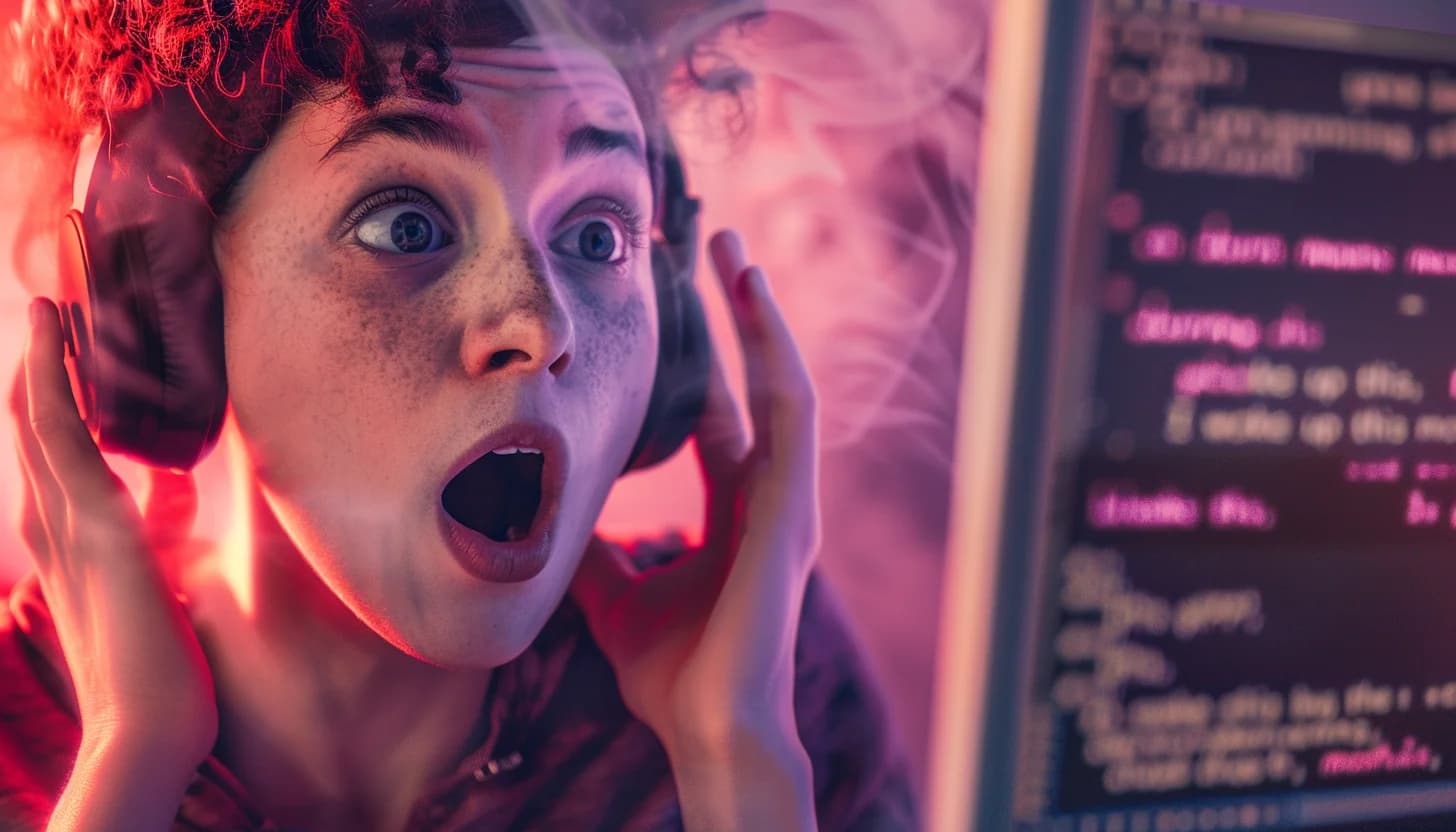
Let me save you some frustration. If you open ChatGPT, type "write me a song about love," and expect something good to come out, you are going to be disappointed. The default output from any large language model is painfully generic. It rhymes, sure. It follows a verse-chorus structure. But it reads like a greeting card that was written by committee.
I have been writing and producing custom songs through ChangeLyric's done-for-you service for years, and ChatGPT has become a legitimate part of my workflow. Not as a replacement for human creativity, but as a tool that speeds up the boring parts so I can focus on the parts that actually matter.
Here is exactly how I use it, including the prompt template that consistently produces usable results.
Why Default ChatGPT Lyrics Sound So Bad
ChatGPT was trained on the entire internet. That means it has absorbed millions of song lyrics, poetry, greeting cards, and social media captions. When you ask it to write lyrics without specific direction, it averages all of that together into something that sounds like everything and nothing at the same time.
The result is lyrics that are "safe and usual." You get lines about hearts on fire, dancing in the rain, and reaching for the stars. There is nothing wrong with those images individually, but when every AI-generated song uses them, none of them land. Real songwriting requires specificity. The details are what make a listener feel something.
Think about the difference between "I miss you every day" and "I still set two coffee cups out every morning." Both say the same thing. One is forgettable. The other hits you in the chest. ChatGPT defaults to the first version every single time unless you force it to do better.
The Prompt Template That Actually Works
After testing dozens of approaches, I landed on a prompt structure that consistently produces lyrics worth editing. The key is giving ChatGPT constraints. Without constraints, it wanders into cliche territory immediately. Here is the template:
Please tweak the lyrics below to craft a new song. IMPORTANT: Ensure the new lyrics
mirror the original's rhyme scheme and syllable structure. The final piece should
encapsulate the following themes and feelings:

[Insert your specific themes, emotions, personal details, and story elements here]

Here are the original lyrics:

[Insert original song lyrics here]
This prompt works because it does three important things. First, it gives ChatGPT a structural framework to follow instead of letting it invent one. Matching an existing rhyme scheme and syllable count forces the AI to work within constraints, and constraints breed creativity. Second, it makes you articulate what you actually want before generating anything. Third, it anchors the output to a real song that already works musically.
If you are working on a birthday song with custom lyrics or a wedding song parody, this template is especially useful. You already have the source song picked out. You already know the emotional tone you want. You just need lyrics that fit the melody.
Add Your Own Flavor First
The single biggest mistake people make with ChatGPT lyrics is treating it like a vending machine. You do not just insert a topic and get a finished product. You need to feed it raw material. The more personal and specific your input, the better the output.
Before you even open ChatGPT, write down the real details. Not "I want a song about my wife." Instead, write down the actual moments. The way she laughs at her own jokes before she finishes telling them. The road trip where the car broke down in the middle of nowhere and you both just sat on the hood and watched the sunset instead of panicking. The inside jokes that nobody else would understand.
These details do not need to be poetic. They do not need to rhyme. They just need to be real. When you dump a paragraph of genuine personal details into that prompt template, ChatGPT suddenly has something specific to work with instead of falling back on generic filler.
Treat ChatGPT As a Sidekick, Not the Main Act
Here is the mindset shift that separates people who get good results from people who get frustrated and give up. ChatGPT is a drafting tool. It is not a songwriter. Its job is to give you something to react to, not something to publish.
When I use the prompt template above, I generate three or four variations. Then I go through each one with a highlighter mentality. Maybe version one has a great opening line but the chorus falls flat. Version three has a terrible verse but the bridge is surprisingly good. I take the best pieces from each version and assemble them into something that works.
This is the same comping approach I use in vocal production. You never expect one perfect take. You generate options and build the final product from the best parts. If you want to understand how professional producers approach this, I wrote about what I learned from 600+ lyric swap projects and the same principle applies to lyric writing.
Ready to Transform Your First Song?
Join thousands of producers & clients who use ChangeLyric.
✓ Free trial available ✓ No content moderation ✓ Cancel anytime
Refine Through Conversation, Not One-Shot Prompts
Most people send one prompt and judge the entire output. That is like recording one vocal take and calling the song done. The real power of ChatGPT is in the back-and-forth conversation.
After your first generation, respond with specific feedback. "The second verse is too abstract. Replace the metaphor with something more concrete. Reference the specific moment when we got lost driving through Vermont." Or: "The chorus rhyme scheme works but the syllable count is off in line three. It needs to be eight syllables, not eleven."
ChatGPT responds well to concrete, specific direction. It responds poorly to vague requests like "make it better" or "make it more emotional." The more precisely you can describe what you want changed, the better the revision will be. Think of it like giving notes to a session musician. "Play it with more feeling" gets you nothing. "Add a slight ritardando before the chorus and bring the dynamics down in the second verse" gets you exactly what you need.
Common Mistakes That Kill Your Lyrics
After working with hundreds of clients who come to me with AI-generated lyrics, I see the same problems over and over. Here are the ones you need to watch for:
- No constraints in the prompt. If you do not specify a rhyme scheme, syllable count, or reference song, ChatGPT will default to its most generic patterns.
- Too many topics in one song. AI loves to cram every idea you mention into every verse. Tell it to focus on one image or moment per section.
- Accepting the first draft. The first output is a starting point, not a finish line. Always iterate.
- Ignoring syllable count. If the lyrics do not match the melody, they are useless. Always specify syllable targets or provide a reference song.
- Using AI lyrics without checking singability. Read every line out loud. If you stumble over it while speaking, a singer will stumble over it too.
That last point is critical. ChatGPT has no concept of how words feel in your mouth. It does not know that certain consonant clusters are hard to sing at tempo, or that cramming too many unstressed syllables together creates an awkward rush. Always read your lyrics out loud before committing to them.
When You Need More Than Just Lyrics
Writing lyrics is only half the equation. At some point, you need those lyrics in an actual song. That is where things get more complex.
You can use AI music generators like Suno or Udio to generate completely new songs from your lyrics. But if you want to take an existing song and swap the lyrics to your new version, that is a different process entirely.
That is literally what ChangeLyric was built for. You upload a song, edit the lyrics to whatever you want, and the tool handles the vocal synthesis and mixing.
It is especially useful for parodies, custom songs for events, or cleaning up explicit lyrics. If you have ever tried to manually replace vocals in a song, you know how painful that process is. The tool automates the hard parts.
For a deeper look at how lyric swapping works and what goes into the process, check out the getting started guide for changing lyrics in songs. And if you are curious about the cost side of things, I break that down in how much it costs to change song lyrics.
Advanced Prompting Techniques
Once you have the basic template down, here are some techniques that push the quality even further:
Specify the genre voice. Tell ChatGPT to write in the style of country storytelling, or hip-hop wordplay, or indie folk introspection. Each genre has its own lyrical conventions, and naming the genre helps ChatGPT adopt the right vocabulary and cadence.
Set emotional arcs. Do not just say "sad song." Say "the verse should feel numb and detached, the pre-chorus should build tension, and the chorus should be a release of grief." Songs that stay at one emotional level get boring fast.
Provide anti-examples. Tell ChatGPT what you do NOT want. "Do not use the words heart, soul, or fire. Do not use the phrase forever and always. Avoid any reference to dancing in the rain." This forces the model off its most overused paths and into more original territory.
Use a persona. "Write these lyrics as if you are a 65-year-old retired fisherman writing to his late wife" produces wildly different output than a generic prompt. The more specific the voice, the more distinct the lyrics.
Real Talk: AI Will Not Replace Songwriters
I want to be honest about something. Even with the best prompts and the most careful iteration, ChatGPT lyrics rarely match what a skilled human songwriter produces. The best songs come from lived experience, messy emotions, and the kind of creative leaps that an algorithm cannot replicate.
What AI is genuinely good at is breaking through writer's block, generating structural options, and doing the grunt work of fitting words to meter. If you are staring at a blank page and cannot get started, ChatGPT is an incredible starting tool. If you are trying to write the next "Bohemian Rhapsody," you are going to need more than a prompt template.
The people who get the most value from AI lyrics are the ones who already have something to say. They have the emotions, the stories, and the ideas. They just need help with the craft of turning those raw materials into something that rhymes, scans, and fits a melody. That is where ChatGPT shines.
And if you already have great lyrics but need to swap them into an existing song, ChangeLyric's V3 engine handles that entire pipeline. Write the lyrics with ChatGPT, then use ChangeLyric to put them in any song you want.
Copyright Reminder
If you are writing new lyrics to fit an existing copyrighted song, the original copyright holder maintains all rights to the melody and composition. Your new lyrics may be considered a derivative work. Personal use exists in a legal gray area. Commercial use of modified copyrighted songs requires proper licensing. Users are responsible for understanding applicable laws in their jurisdiction.
Frequently Asked Questions
Use a structured prompt that includes a reference song's lyrics, specifies the rhyme scheme and syllable count to match, and provides specific personal details, themes, and emotions you want in the new version. Avoid generic prompts like 'write me a love song' because they produce generic results.
ChatGPT averages patterns from millions of songs in its training data, so without specific constraints it defaults to the most common phrases and imagery. Adding constraints like syllable counts, anti-examples of cliches to avoid, and personal story details forces the model into more original territory.
Yes, and this is actually where ChatGPT works best. Give it the original lyrics as a structural template, specify what themes and emotions you want, and it will generate new words that fit the same rhyme scheme and meter. For actually putting those new lyrics into the song audio, you can use a tool like ChangeLyric.
At minimum, generate three to four variations and then cherry-pick the best lines from each. After assembling your best draft, do at least two to three rounds of specific revisions targeting individual sections. One-shot prompts almost never produce usable final lyrics.
Lyrics generated entirely by AI from an original prompt are generally yours to use. However, if you based them on copyrighted song lyrics, the result may be considered a derivative work. Copyright laws around AI content are still evolving. Consult a music attorney if you plan to release AI-assisted lyrics commercially.