Free Backing Tracks: The Real Pros and Cons Nobody Talks About
Free backing tracks sound like a no-brainer, but there are serious tradeoffs. Here's an honest breakdown of when free instrumentals work, when they don't, and what to do instead.
Posted by
 William H. Mason
Related reading
Best Songs to Turn Into Halloween Parodies
Eleven songs that turn into funny Halloween parodies, from Monster Mash to singalong anthems. How to pick, rewrite the lyrics, and get it produced before the party.
How to Make a Halloween Parody Song
I turned Ashnikko's Working Bitch into a Halloween parody with Overdub Studio: spooky lyrics, rescore takes, a trained voice model, and comping in the DAW.
Aïcha Name Swap to Neesha: Revised to Five Stars
Cheb Khaled's Aïcha with the name changed to Neesha throughout. The first cut missed coverage and the customer pushed back. We revised and earned a five-star review.
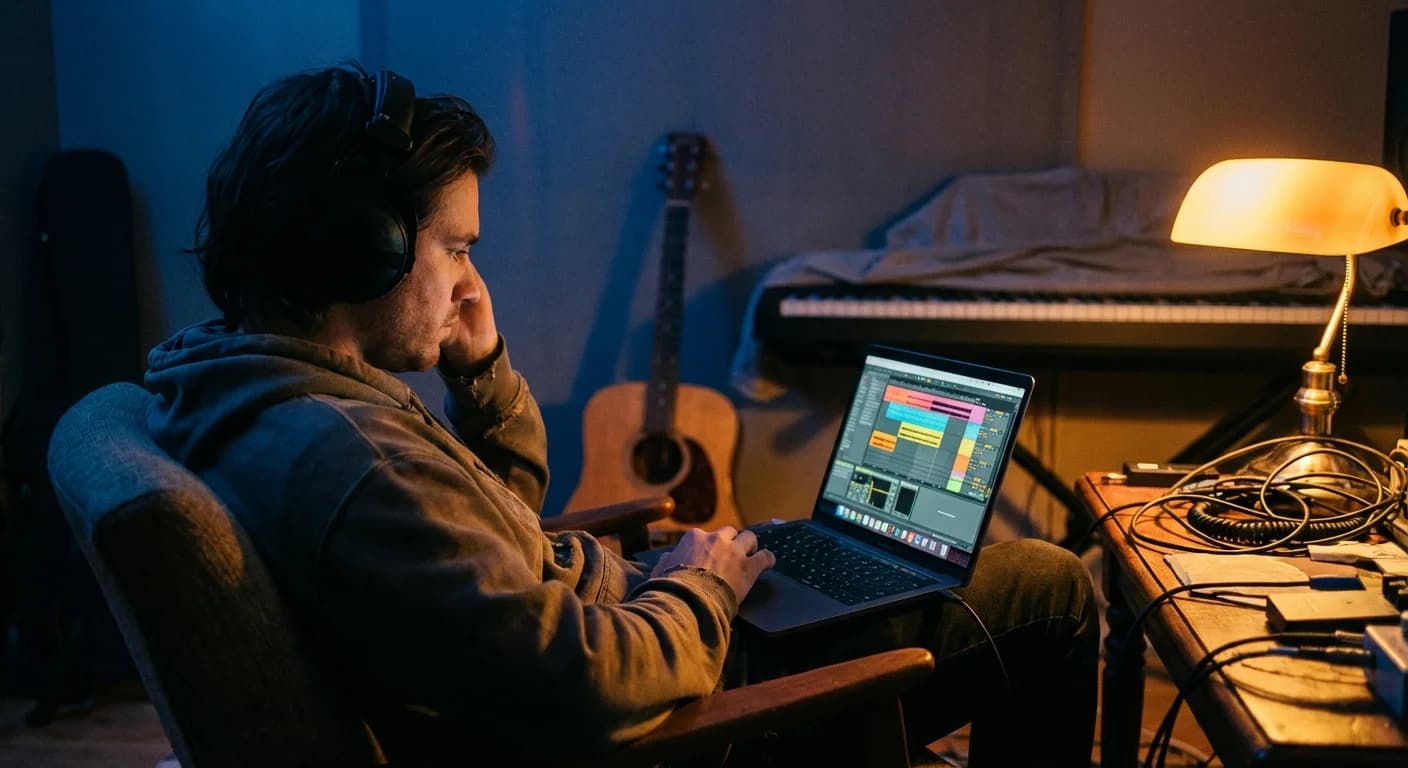
Free backing tracks are everywhere. BeatStars, SoundCloud, YouTube, random forums with sketchy download links. If you are a musician on a budget, the idea of grabbing a professional-sounding instrumental for exactly zero dollars is pretty appealing.
But here is the thing most people do not talk about: free does not always mean free. There are hidden costs, quality tradeoffs, and licensing landmines that can bite you later.
I have worked with hundreds of musicians through ChangeLyric and our done-for-you service, and I have seen every possible outcome when artists build on free instrumentals.
So let me break this down honestly. No sugarcoating, no sales pitch. Just the real pros and cons so you can make an informed decision.
The Advantages of Free Backing Tracks
Zero Financial Risk to Get Started
This is the obvious one. When you are just starting out, spending $50 to $500 on a custom beat feels like a massive gamble. What if the song flops? What if your vocals do not fit the track? What if you hate the final result?
Free tracks eliminate that risk entirely. You can experiment with different styles, test your vocal range against various instrumentals, and figure out what works before you invest real money. Think of it as a sandbox for your creative process.
I actually recommend this approach for beginners. Get your feet wet. Record a dozen songs on free beats. Learn what BPM range suits your delivery. Figure out whether you gravitate toward minor keys or major keys. That knowledge is worth more than any single beat purchase.
Speed to Market
Platforms like BeatStars let you filter by BPM, key, genre, and mood. You could realistically find a backing track, record your vocals, mix it roughly, and have a single ready to upload in half a day.
That speed matters more than most artists realize. The music industry rewards consistency and volume. Dropping one song every six months because you are waiting for the perfect custom beat is a losing strategy. Releasing something decent every two weeks builds an audience faster than perfection ever will.
If you are working on changing lyrics for an existing song, speed is even more critical. The faster you can iterate, the more versions you can test with your audience.
The Quality Has Gotten Surprisingly Good
Ten years ago, free beats sounded like free beats. Thin drums, basic chord progressions, obvious loops. That is not the case anymore. Producers upload high-quality instrumentals as loss leaders to attract clients who will eventually pay for exclusives or custom work.
The price and the quality of backing tracks are not necessarily related in 2026. Some of the best instrumentals I have heard came from producers giving away their first few beats to build a reputation. The production quality on free platforms has risen dramatically because the tools have gotten cheaper and more accessible.
The Disadvantages of Free Backing Tracks
The Uniqueness Problem Is Real
This is the big one that kills artists. When a beat is free, it is free for everyone. That means 50, 100, maybe 500 other people are using the exact same instrumental. Your song is no longer unique. It is one of many.
I have seen this cause real problems. An artist spends months promoting a song, gets it placed on a playlist, starts gaining traction, and then a listener comments that they heard the same beat on someone else's track. That is a credibility hit you cannot undo. Audio fingerprinting services like Shazam can also get confused when multiple songs share the same instrumental.
If you are serious about building a career, this matters. For casual projects, parodies, or practice recordings, it is less of an issue. But for anything you want to build a brand around, shared instrumentals are a liability.
Usage Caps and Hidden Licensing Terms
Here is where "free" stops being free. Many backing tracks come with usage caps. You can use the track for free up to a certain number of streams or downloads. Once you cross that threshold, you owe the producer a licensing fee.
Some producers are reasonable about this. Others are not. I have heard stories of artists getting hit with takedown notices or licensing demands after a song unexpectedly went viral on TikTok. The terms were buried in a license agreement nobody reads.
Always read the license. Every single time. If a free beat comes with a "non-commercial" restriction, that means you cannot monetize it on Spotify, Apple Music, or YouTube. Period. Violating that is not a gray area. It is copyright infringement.
Lower Creative Investment from the Producer
Not every free beat is a hidden gem. Some producers upload their weakest work for free because they know it will not sell. Recycled drum patterns, generic samples, uninspired arrangements. The beat exists to drive traffic, not to be a masterpiece.
You can usually tell the difference if you listen carefully. Does the beat have dynamic variation? Does the arrangement build and release tension? Are there interesting sound design choices? Or does it just loop the same four bars for three minutes? If it sounds like background music for a YouTube tutorial, it probably will not carry a vocal performance.
You Rarely Get Stems
This is the technical limitation that frustrates producers the most. Free tracks almost always come as a single MP3 or WAV file. You do not get individual stems for drums, bass, synths, or any other element.
Without stems, your mixing options are severely limited. You cannot duck the instrumental under your vocals properly. You cannot remove a conflicting frequency in the synth pad. You cannot adjust the bass to sit better with your voice. You are stuck with whatever the producer mixed, and you have to make your vocals work around it.
For anyone who takes mixing seriously, this is a dealbreaker. If you have ever tried to create a radio edit or clean version of a track, you know how important stem access is. Working with a stereo mix is like trying to edit a photo that has been flattened. You can do some things, but the precision is gone.
What Are the Alternatives?
AI-Generated Instrumentals
This is where things have shifted dramatically in the last couple of years. Tools like Suno and Udio can generate complete instrumentals from a text prompt. The quality varies, but at its best, AI-generated music is indistinguishable from human-produced beats.
The advantage here is uniqueness. Every generation is different. Nobody else has your exact instrumental. You also get way more control over genre, mood, tempo, and key than scrolling through someone else's catalog.
The downside is that you are working with AI output, which means inconsistency. Some generations are incredible. Others sound like a fever dream. You need to generate multiple versions and cherry-pick the best one. If you want to know what it costs to produce and modify songs in 2026, I wrote a detailed breakdown.
Ready to Transform Your First Song?
Join thousands of producers & clients who use ChangeLyric.
✓ Free trial available ✓ No content moderation ✓ Cancel anytime
Affordable Exclusive Beats
The middle ground that most people overlook is buying an affordable exclusive. Many producers sell exclusive rights to beats for $100 to $300. That sounds expensive compared to free, but consider what you get. A unique instrumental that nobody else can use, often with stems included, and a clean license for commercial release.
If you are planning to promote a song seriously, that $200 beat pays for itself the moment you avoid a licensing dispute or a credibility hit from shared instrumentals. Think of it as insurance for your music career.
Modifying Existing Songs
Another approach that has gotten more accessible is working with existing songs and changing the elements you need. At ChangeLyric, we built tools specifically for this. You upload a song, modify the lyrics, and get back a version with your new words sung in the style of the original.
This sidesteps the backing track question entirely. Instead of finding an instrumental and adding vocals, you start with a complete song and reshape it. For personalized gifts like custom birthday songs or tribute tracks, this approach makes way more sense than hunting for the right free beat.
When Free Backing Tracks Actually Work
I do not want to paint free beats as universally bad. There are specific situations where they make perfect sense:
- Practice and skill development - You are learning to record vocals, practice your flow, or test mic techniques. Free beats are perfect for this.
- Demo recordings - You need a rough demo to pitch a concept to a collaborator or label. The beat does not need to be final.
- Content creation - Short clips for TikTok, Instagram Reels, or YouTube Shorts where the full track is not the focus.
- Live performance backing - Rehearsal tracks where you need an instrumental to practice with your band.
- Non-commercial projects - Personal projects, gifts, or fun collaborations where monetization is not the goal.
For any of these use cases, free beats are a legitimate option. The problems only emerge when you try to build something commercial on a foundation that was never designed for it.
When Free Backing Tracks Will Burn You
On the other hand, avoid free beats when:
- You plan to release commercially - Streaming platforms, digital sales, sync licensing. All require clear rights you probably do not have with a free beat.
- You want brand recognition - If listeners hear your beat on three other artists' tracks, your brand takes a hit.
- You need mixing flexibility - Without stems, your engineer is working with one hand tied behind their back.
- The project has any budget at all - Even $50 for a lease beat gives you dramatically better legal standing than a free download.
I have seen artists invest hundreds of hours into promoting a song built on a free beat, only to have it taken down because the license terms changed or the producer decided to start charging. That time investment is gone. You cannot get it back.
If you have ever wondered why AI vocals sometimes miss the mark, imagine compounding that with licensing uncertainty on the instrumental too.
Practical Tips If You Use Free Beats
If you decide free backing tracks make sense for your project, protect yourself:
- Screenshot the license terms - Producers change their terms. Websites go down. Keep a record of what you agreed to when you downloaded the beat.
- Credit the producer - Even if the license does not require it, crediting the producer is good practice and builds relationships for future collaborations.
- Track your stream counts - If the license has a usage cap, set a reminder to check your numbers before you hit the limit.
- Keep the original download - If a dispute arises, having the original file with metadata intact can help prove when you obtained the track.
- Do not invest heavily in promotion - Until you own the beat outright or have a clear commercial license, keep your marketing spend modest.
These steps take five minutes and can save you months of headaches. The 600+ lyric swap projects I have worked on taught me that documentation is everything. The artists who keep clean records never get caught off guard.
The Real Cost of "Free"
Here is my honest take after years of working in this space. Free backing tracks are a tool, not a strategy. They have a place in your workflow. They should not be the foundation of your career.
The real cost of free is not money. It is opportunity cost. Every hour you spend hunting for a decent free beat is an hour you could spend writing, recording, or promoting. Every song you release on a shared instrumental is a song that cannot fully represent your brand. Every licensing ambiguity is a ticking clock.
When you factor in the time spent searching, the limitations on mixing, and the risk of takedowns, free beats often cost more than a $50 lease. They just charge you in different currencies.
If you want to explore what modern tools can do for your music production workflow, check out the latest updates to our V3 engine or try ChangeLyric yourself.
Use free beats to learn. Use them for fun. Use them for practice. But when it is time to get serious, invest in your music the same way you would invest in any other business. The returns are worth it.
Copyright Reminder
Using backing tracks, whether free or paid, does not grant you rights to copyrighted material. If you are modifying or performing over someone else's composition, the original copyright holder retains their rights. Free beat licenses only cover the specific terms agreed upon with the producer. Always read the full license agreement and consult legal counsel for commercial releases.
Frequently Asked Questions
Usually not. Most free backing tracks come with non-commercial licenses or usage caps. Once you exceed a certain number of streams or downloads, you need to upgrade to a paid license. Always read the full license terms before releasing any song commercially.
Only if the license explicitly allows commercial distribution. Many free beats are licensed for non-commercial use only. Uploading to streaming platforms counts as commercial distribution even if you are not directly charging listeners. Check the license terms or contact the producer directly.
Nothing legally prevents this. Free beats are available to everyone, so multiple artists can release songs using the same instrumental. This can cause confusion with audio fingerprinting services and dilute your brand identity. For serious releases, consider exclusive beats or AI-generated instrumentals.
They solve the uniqueness problem since every AI generation is different. Quality can be hit or miss, but tools like Suno and Udio produce increasingly professional results. The main advantage is that you own a unique instrumental nobody else has, with clearer licensing terms for commercial use.
BeatStars, SoundCloud, and YouTube are the most popular sources. Look for producers who offer free beats as promotional material since these tend to be higher quality than random uploads. Always verify the license type before downloading and keep a record of the terms.
Not strictly, but stems make mixing significantly easier. Without stems, you are limited in how much you can adjust the instrumental to fit your vocals. If you plan to have the song professionally mixed, your engineer will almost certainly want stems. Most free beats do not include them.
Want to Skip the Backing Track Search?
Instead of hunting for the right instrumental, start with any song you love and change the lyrics to make it yours. ChangeLyric lets you upload a track, swap the words, and get back a version with your new lyrics sung in the original style. No beat hunting required.
Try ChangeLyric Free