Random Music Genre Generator: Free One-Click Picker
Free random music genre generator and randomizer: one click gives you a genre for all 7 instrument layers, from drums to vocals, so you can build a full sound.
Posted by
 William H. Mason
Related reading
Best Songs to Turn Into Halloween Parodies
Eleven songs that turn into funny Halloween parodies, from Monster Mash to singalong anthems. How to pick, rewrite the lyrics, and get it produced before the party.
How to Make a Halloween Parody Song
I turned Ashnikko's Working Bitch into a Halloween parody with Overdub Studio: spooky lyrics, rescore takes, a trained voice model, and comping in the DAW.
Aïcha Name Swap to Neesha: Revised to Five Stars
Cheb Khaled's Aïcha with the name changed to Neesha throughout. The first cut missed coverage and the customer pushed back. We revised and earned a five-star review.

Genre labels are getting less useful every year. Artists are blending sounds in ways that do not fit neatly into any Spotify category, and listeners are discovering music through playlists and algorithms rather than genre bins. So why not build your own genre from scratch?
I built a free ChatGPT-powered music genre generator that spits out random genre combinations for each instrument layer in a song. But before I hand you the tool, I want to walk through the framework behind it. Understanding how genres actually work makes the generator far more useful than just clicking a button and hoping for something cool.
What Actually Makes a Genre?
Here is the problem with how most people think about genre. They use one word to describe two completely different things. When someone says "country music," they might mean the twangy guitar sound and steel pedal tone. Or they might mean the lyrical themes about trucks, heartbreak, and small-town life. Those are not the same thing.

There should really be two separate labels. One for the overall sound. The instruments used, how they are played, the production effects applied. And another for the theme: what the song is about, the lyrical content, the emotional territory it covers.
A hip-hop beat with country lyrics is not really hip-hop or country. It is something new. And that overlap is where interesting things happen. When you separate sound from theme in your head, you can mix and match in ways that feel fresh instead of derivative.
The "Genre-less" State of Modern Music
Technology completely changed how people consume music. Streaming algorithms do not care about genre boundaries. They care about sonic similarity, listening patterns, and engagement. A playlist called "Chill Vibes" might have jazz, lo-fi hip-hop, ambient electronic, and acoustic folk sitting side by side.
Artists are leaning into this. Olivia Rodrigo's "Good 4 U" has 808 bass parts, an acoustic drum kit, and fuzzy electric guitars all in the same song. Is that pop-punk? Pop? Alternative? The answer is that it does not matter, because genre lines are dissolving faster than anyone can redraw them.
This is good news for creators. The less rigid the genre system becomes, the more freedom you have to pull from different traditions and create something that sounds genuinely yours. But freedom without structure leads to mush. That is where a framework helps.
The 7-Layer Framework for Building a Genre
I think about songs as having seven distinct layers. Each layer can pull from a completely different genre tradition, and the combination of all seven creates your unique sound. Here is the breakdown:
- Vocals - The singing or rapping style and vocal tone
- Lead Instrument - The primary melodic instrument that carries riffs and hooks
- Melody Layer - Secondary harmonic content like synth pads, arpeggios, or chord stabs
- Drums - The core rhythmic foundation (kick, snare, hi-hat patterns)
- Percussion Layer - Additional rhythmic texture beyond the main drums
- Pads - Atmospheric background layers that set the mood
- Bass - The low-end foundation tying rhythm and harmony together
For each of these seven layers, you assign two properties. A tone genre (what it sounds like sonically) and a playstyle genre (how it is performed or programmed). A bass guitar with a jazz tone played in a punk playstyle sounds completely different from a jazz bass played in a jazz style. Same instrument, different genres on each axis.
Putting It Into Practice
Here is the template. For each of the seven layers, fill in this sentence:
"[Layer] performed in the style of [playstyle genre] with the tone of [tone genre]."
So you might end up with something like: "Vocals performed in the style of R&B with the tone of indie folk. Lead instrument performed in the style of metal with the tone of jazz. Drums performed in the style of trap with the tone of acoustic." That gives you a wildly specific starting point that no one has explored before.
You do not need to use all seven layers. Even applying this framework to just two or three layers while keeping the rest conventional can give you a sound that stands out. The point is intentionality. Instead of vaguely "genre-bending," you are making deliberate choices about exactly where and how you are crossing boundaries.
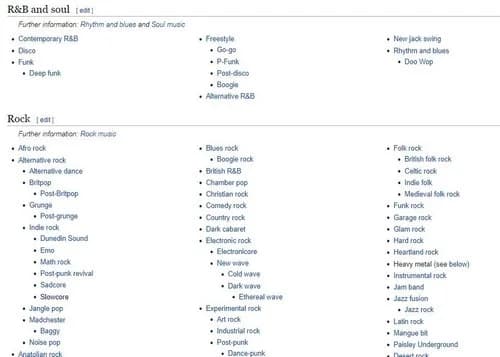
If you look at the Wikipedia list of music genres, there are hundreds. Most people only know a fraction of them. That is actually a huge creative resource. Pick genres you have never heard of and research what makes them tick. Then plug those into the framework.
The AI Genre Generator Tool
I built a free tool that does this automatically. It is powered by ChatGPT and randomly assigns genre combinations to each of the seven instrument layers. You press a button, get a unique genre blueprint, and use it as a starting point for your next track. If you like this format, there is a companion music video idea generator that works the same way for visuals.
A few tips for getting the most out of it. If the generator suggests a genre you have never heard of, search for it on YouTube or Spotify with the word "playlist" appended. Listening to actual examples is worth more than reading a definition. The instrumentation can shift throughout your song, so you do not have to lock one genre combo for the entire track.
You absolutely should pick and choose. If the generator gives you seven layers of random genres and only one of them sparks an idea, that is a win. Even using the recommendation from just one layer could give you cool results. The tool is a brainstorming partner, not a prescription.
Ready to Transform Your First Song?
Join thousands of producers & clients who use ChangeLyric.
✓ Free trial available ✓ No content moderation ✓ Cancel anytime
Genre Blending Goes Beyond Instruments
This whole framework focuses on the sonic side of genre, but do not forget the lyrical side. The words in a song carry their own genre expectations. A death metal track about going to the grocery store hits differently than one about existential dread. You can genre-bend with lyrics just as effectively as with instruments.
If you are working with ChangeLyric, you can actually experiment with this directly. Take a song in one genre and swap the lyrics to match a completely different genre's typical themes. The contrast between the musical backdrop and the lyrical content creates something unexpected.
I have seen this work in practice across hundreds of lyric swap projects. Sometimes the most compelling results come from mismatching the sonic genre with the lyrical genre. A soft acoustic track with aggressive rap lyrics. A heavy metal instrumental with sincere love poetry. The tension between the two creates something that sticks.
Practical Tips for Genre Experimentation
Start with what you know. If you are a rock producer, keep your core sound in rock and change one or two layers. Swap the drums for a reggaeton pattern. Add a jazz bass line. Small changes create surprisingly big shifts in feel without forcing you into unfamiliar territory all at once.
Reference tracks are essential. Once you have your genre blueprint, find actual songs that use similar combinations. This is not about copying. It is about understanding how other artists solved the same production challenges you are about to face. How do you make jazz chords work over a trap beat? Someone has already done it. Find their work and study the arrangement.
Do not overthink it. The framework gives you direction, but your ears make the final call. If something sounds good, it is good, regardless of whether it fits the genre blueprint. And if a combination sounds terrible, drop it and try another. The generator gives you infinite possibilities. There is no reason to force one that is not working.
Genre Blending in the Age of AI Music
AI music tools like Suno and Udio (which I compared head to head) have made genre experimentation easier than ever. You can describe a genre combination in a text prompt and hear a rough version in seconds. That feedback loop used to take hours of production work.
But AI tools have a limitation. They tend to gravitate toward genre averages. Ask for "jazz metal" and you will probably get something that sounds like a Wikipedia description of jazz metal rather than a genuinely creative fusion. That is where the 7-layer framework becomes especially useful. Instead of giving the AI a vague fusion label, you can describe exactly what you want on each layer.
If you are using AI to generate music and then want to change the lyrics afterward, tools like ChangeLyric let you keep the genre-blended instrumental while swapping the vocal content. If you have never done this before, the getting started guide walks through the whole process.
This means you can prototype genre experiments with AI, nail the sound you want, and then customize the lyrics to match your creative vision.
Why Genre Labels Still Matter (Kind Of)
I have been arguing that genre is dissolving, but labels still serve a practical purpose. They help people find music they like. They give marketing teams something to work with. And they create shared vocabulary between musicians. Telling your drummer "play it like a bossa nova groove" communicates more in five words than a paragraph of technical description.
The trick is treating genre labels as ingredients rather than recipes. A recipe says "make this exact thing." An ingredient says "add this flavor." When you approach genre as a set of ingredients you can combine in any proportion, the creative possibilities explode. You stop asking "what genre am I making?" and start asking "what ingredients do I want in this?"
If you are interested in how genre impacts the lyric-swapping process, check out the guide on customizing song lyrics for special occasions. Genre context matters a lot when you are rewriting words for a different audience. A birthday song in a punk style needs different lyrical sensibility than one in a jazz ballad style.
Building Your Signature Sound
The real goal of genre experimentation is not to invent a genre that gets its own Wikipedia page. It is to find a combination of sounds that feels like you. Every distinctive artist is really just a specific blend of influences that no one else has combined in quite the same way.
Use the generator. Use the framework. Try combinations that seem ridiculous. A lot of them will sound bad. That is fine. The ones that sound good will be genuinely yours because no one else made those exact choices in that exact combination.
If you want to explore how your genre experiments translate to vocal production, I wrote about why AI vocals sometimes miss the mark and what you can do about it. Genre choice directly affects how well AI vocal models perform, because the training data skews toward certain styles.
And if costs are a concern as you experiment, here is a breakdown of what lyric changes actually cost across different tools and services. Genre experimentation does not have to be expensive.
Copyright Reminder
If you are modifying copyrighted songs, the original copyright holder maintains all rights. AI-generated music platforms typically grant commercial rights only for original songs they generate. Modifying existing copyrighted works does not transfer any rights to you. Personal use exists in a legal gray area. Users are responsible for understanding the applicable laws in their jurisdiction.
Frequently Asked Questions
A music genre generator is a tool that randomly assigns genre styles to different instrument layers in a song. It helps producers and songwriters break out of creative ruts by suggesting unexpected genre combinations they might not think of on their own.
Use the 7-layer framework: vocals, lead instrument, melody layer, drums, percussion, pads, and bass. For each layer, assign a tone genre (what it sounds like) and a playstyle genre (how it is performed). The unique combination across all layers creates your signature sound.
Yes. Tools like Suno and Udio let you describe genre combinations in text prompts and generate rough demos in seconds. For better results, describe each instrument layer specifically rather than using vague fusion labels like 'jazz metal.' Then use ChangeLyric to customize the lyrics if needed.
No. Even changing one or two layers while keeping the rest conventional can produce a distinctive sound. The framework is a brainstorming tool, not a rigid prescription. Use whatever sparks inspiration and discard the rest.
Lyrics carry their own genre expectations separate from the instrumental sound. Mismatching lyrical themes with musical genres can create compelling contrast. For example, aggressive rap lyrics over a soft acoustic track, or love poetry set to heavy metal instrumentation.
Yes, the ChatGPT-powered genre generator embedded in this article is completely free. Press the button, get a genre blueprint for all seven instrument layers, and use it as a starting point for your next production.