Music Video Idea Generator: 50+ Concepts to Kickstart Your Next Visual
Stuck on music video concepts? Here are 50+ proven music video ideas organized by budget, genre, and style - plus a creative framework for generating unlimited original concepts.
Posted by
 William H. Mason
Related reading
Best Songs to Turn Into Halloween Parodies
Eleven songs that turn into funny Halloween parodies, from Monster Mash to singalong anthems. How to pick, rewrite the lyrics, and get it produced before the party.
How to Make a Halloween Parody Song
I turned Ashnikko's Working Bitch into a Halloween parody with Overdub Studio: spooky lyrics, rescore takes, a trained voice model, and comping in the DAW.
Aïcha Name Swap to Neesha: Revised to Five Stars
Cheb Khaled's Aïcha with the name changed to Neesha throughout. The first cut missed coverage and the customer pushed back. We revised and earned a five-star review.
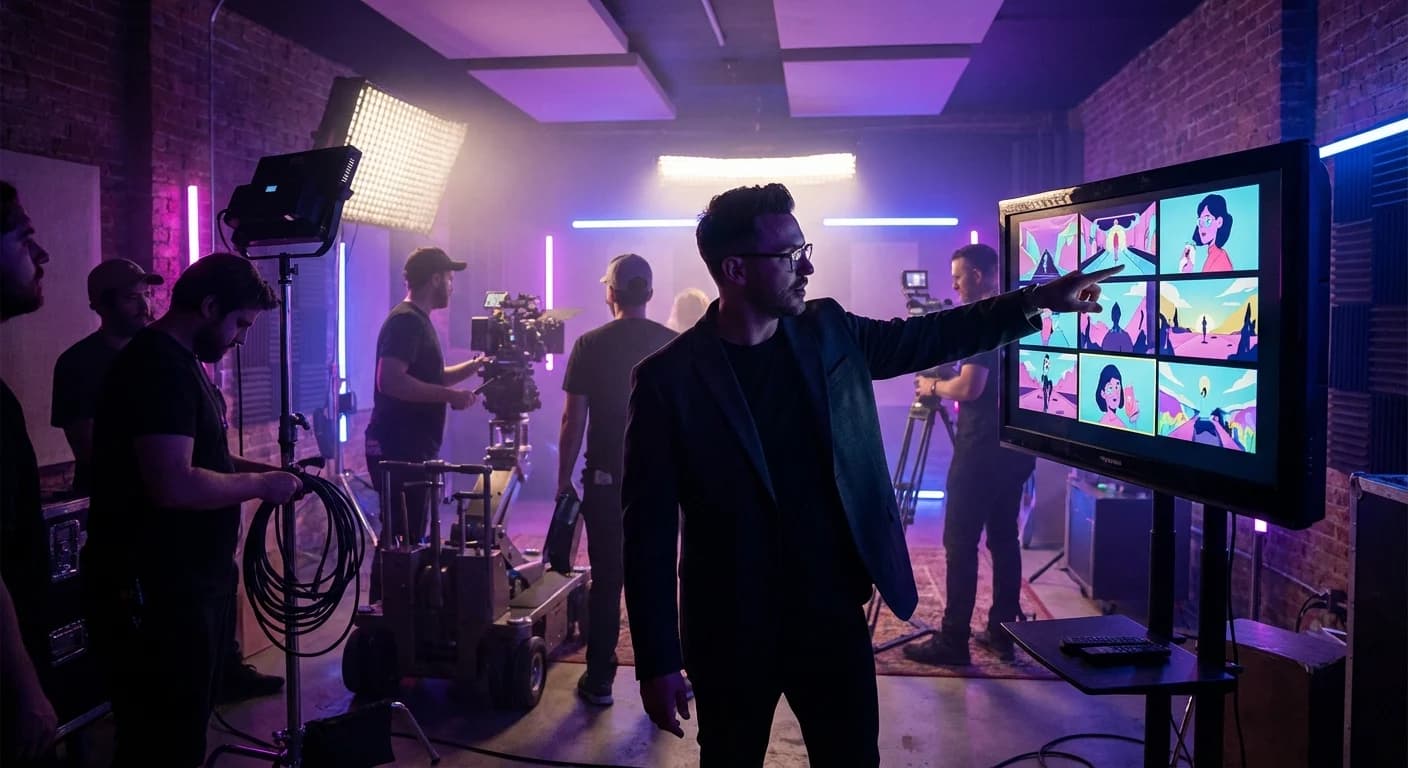
You wrote a song. You love it. Now you need a music video and your brain is completely blank. I've been there more times than I can count, staring at a wall trying to conjure up a visual concept worthy of the track I just finished producing.
The dirty secret of music video creation is that the concept matters more than the budget. A $200 video with a killer idea will outperform a $20,000 shoot with a generic performance clip every single time. I've seen it happen again and again across hundreds of projects.
So let's fix your creative block. I'm going to walk you through a framework for generating unlimited music video ideas, then give you 50+ concrete concepts organized by budget and style. By the end, you'll have more ideas than you know what to do with.
The Random Collision Framework
The best music video concepts come from unexpected combinations. Think about it - Childish Gambino's "This Is America" works because it collides joyful dancing with sudden violence. OK Go's treadmill video works because nobody expected choreography on gym equipment. The surprise IS the concept.
Here's the framework I use. Take four elements and smash them together. A subject (person, animal, object), an action (what they're doing), an aesthetic (how it looks), and a location (where it happens). The more unexpected the combination, the more memorable the video.
For example: "A bride + running + neon noir aesthetic + abandoned shopping mall." That's already a more interesting concept than 90% of indie music videos I see on YouTube. The random collision of unrelated elements creates tension, and tension creates interest.
Build Your Subject Pool
Your subject doesn't have to be the artist performing. Some of the most iconic music videos feature no performance footage at all. Think about characters, objects, or animals that could carry the visual narrative.
- People: strangers, elderly couples, children, dancers, athletes, costumed characters
- Animals. A single dog following someone, birds in formation, fish in an aquarium
- Objects. A letter being passed between people, a clock running backwards, a balloon drifting through a city
- Abstract: shadows, reflections in puddles, paint dripping, smoke patterns
Stock Your Action Library
The action is what creates momentum in your video. Static subjects get boring fast. Even if the action is slow and subtle - like someone gradually aging through time-lapse - movement keeps viewers locked in.
- Physical: dancing, running, falling, climbing, swimming, fighting, building, destroying
- Emotional: crying, laughing, transforming, disappearing, remembering, searching
- Surreal: floating, multiplying, shrinking, melting, glitching, rewinding
Low Budget Ideas (Under $500)
Money is not the barrier. Creativity is. Some of the most-watched music videos in history were made for almost nothing. Here are concepts you can execute with a phone, some friends, and maybe a few props.
One-Take Concepts
A single continuous shot forces you to be creative with blocking and choreography. It also looks incredibly impressive when done right because the audience can feel the skill required.
- The Walk-Through: Camera follows the artist walking through increasingly strange environments - normal hallway, then decorated hallway, then hallway filled with people frozen in place
- The Transformation: Artist stands still while the world changes around them - day to night, empty room to crowded party, normal clothes to elaborate costume (achieved through hidden cuts)
- The Reverse: Film the entire video backwards and play it in reverse. Broken glass reassembles, spilled paint flows back into cans, the artist walks backwards through chaos becoming order
- The Split Screen: Two simultaneous stories that mirror or contrast each other, eventually converging at the end
Lyric-Driven Visual Concepts
Your lyrics already contain visual imagery. The simplest approach is to literally film what the lyrics describe, but add one unexpected twist. If your song mentions rain, shoot in rain - but make it rain confetti instead of water. Literal-with-a-twist is endlessly effective.
This is where having the right lyrics makes all the difference. If you're working with ChangeLyric to create a custom version of a song, think about the visual possibilities while you're writing. Lyrics that paint specific pictures translate directly into storyboard frames.
- Lyric Typography: Words from the song appear in the physical environment - written on walls, spelled out in objects, held up on cards by strangers
- Literal Metaphor: Take a metaphor from your lyrics and make it physically real. "Carrying the weight of the world" becomes someone literally carrying a globe on their back through daily life
- Memory Montage: Each verse represents a different memory, shot in a different visual style (warm tones for happy, desaturated for sad, high contrast for intense)
Ready to Transform Your First Song?
Join thousands of producers & clients who use ChangeLyric.
✓ Free trial available ✓ No content moderation ✓ Cancel anytime
Medium Budget Ideas ($500 - $5,000)
With a few thousand dollars, you can rent locations, hire a small crew, and add production value that separates your video from phone-shot bedroom performances. Here's where things get interesting.
Narrative Concepts
Story-driven music videos have the highest rewatch value because people come back to follow the plot. Keep your story simple - one central conflict, three acts, clear resolution. You have 3-4 minutes. That's a short film, not a feature.
- The Time Loop: Character relives the same day/event with small changes each time. Perfect for songs with repetitive structures where the chorus hits differently each time
- Parallel Lives: Two people going through the same experience in different ways - one person's worst day is another's best day, and they cross paths without knowing
- The Chase: Someone pursuing something (or being pursued) across multiple locations. The thing being chased can be literal or abstract - a person, an idea, a feeling
- Role Reversal: The artist plays a completely different character from their public persona. The tough rapper playing a nervous school teacher. The pop singer as a mechanic. Contrast creates intrigue
- Found Footage: Shot to look like discovered home video, security camera footage, or documentary clips. The lo-fi aesthetic becomes the production value
Visual Style Concepts
Sometimes the concept IS the visual style. No elaborate story needed - just a commitment to a distinctive look that nobody else is doing.
- Color Isolation: Everything is black and white except one color. A red dress in a grey world. A blue flower in a monochrome city. Simple but hypnotic
- Projection Mapping: Project visuals directly onto the artist's body and face. Landscapes, patterns, lyrics, abstract shapes. All you need is a projector and a dark room
- Stop Motion Hybrid: Mix live action with stop-motion animated elements. Real person in a stop-motion world, or stop-motion characters interacting with a real environment
- Underwater Filming: Rent a pool or find a clear lake. Underwater footage has an immediate dreamlike quality that elevates any concept. Flowing fabric, floating objects, suspended movement
Genre-Specific Music Video Ideas
Different genres have different audience expectations. You can either lean into those expectations or deliberately subvert them. Both approaches work, but you should know the conventions before you break them.
Hip-Hop and Rap
- The Documentary: Real footage from the artist's neighborhood, family, and daily life. Authenticity is the flex, not the Lamborghini
- The Cypher: Multiple artists in a single location, each getting their spotlight. Works especially well with collaborative tracks
- Animation Blend: Artist performs in live action while animated elements react to the beat around them. Anime-influenced styles are massive right now
- The Heist: Planning and executing something elaborate. Doesn't have to be criminal - could be planning a surprise party, pulling off a flash mob, organizing a community event
Pop and Indie
- The Choreography: A single memorable dance routine that becomes a TikTok trend. This is how pop videos go viral in 2026. The dance IS the marketing
- The Aesthetic Room: Build one incredible set and shoot the entire video there. Think Billie Eilish's room in "bad guy." One location, infinite personality
- Color Story: Each section of the song gets its own dominant color palette. Verse one is all blue, chorus is all gold, verse two is all green. The color shift marks the emotional shift
Rock and Alternative
- The Abandoned Location: Warehouses, factories, rooftops, empty stadiums. The decay of the location contrasts with the energy of the performance
- Crowd Energy: Film an actual show or organize a small crowd. Raw, handheld footage of real people losing their minds to your music is impossible to fake
- Visual Escalation: Start calm and build to complete chaos. The environment literally falls apart as the song builds to its climax. By the final chorus, everything is on fire (metaphorically, please)
Using AI to Generate Music Video Concepts and Footage
We're living in 2026 and AI video generation tools have gotten genuinely useful for music videos. Not as a replacement for real production, but as a complement. Tools like Google Veo and OpenAI Sora can generate B-roll, transition footage, and surreal sequences that would be impossible to shoot on any budget.
The sweet spot is mixing AI-generated footage with real performance shots. If you are new to the broader toolkit, this guide to making music with AI covers the audio side of the same workflow. Use AI for the dreamlike sequences, the impossible camera moves, the surreal visual metaphors. Use real footage for the human moments - the eye contact, the emotion, the authentic performance. Neither approach alone is as powerful as both combined.
If you're using ChangeLyric to create a custom song for someone special, pairing it with an AI-generated video creates a gift that feels genuinely one-of-a-kind. The personalized lyrics combined with custom visuals hits different than just sending someone an audio file.
How to Turn an Idea Into a Storyboard
Having a concept is step one. Translating it into something you can actually shoot is step two, and this is where most people get stuck. Here's my quick storyboarding process.
- Listen to the track 10 times. On each listen, focus on a different element. The lyrics, the beat, the energy curve, the transitions, the emotional peaks. Write down every visual that pops into your head
- Map the energy arc. Mark where the song builds, peaks, and drops. Your video's visual intensity should follow this same arc. Quiet verse = calm visuals. Big chorus = maximum energy
- Sketch 8-12 key frames. You don't need to be an artist. Stick figures and arrows are fine. One frame per major section of the song. This is your shot list skeleton
- Plan your transitions. How do you get from scene A to scene B? A cut? A whip pan? A dissolve? Transitions set the pacing and feel of the entire video
- Identify your hero shot. Every great music video has ONE shot that defines it. The shot people screenshot and share. Plan everything around making that one moment as powerful as possible
Music Video Mistakes That Kill Good Concepts
I've watched thousands of indie music videos and the same mistakes keep showing up. Most of them are concept problems, not budget problems.
- Too many ideas in one video. Pick ONE concept and commit. A video that's half performance, half narrative, half artistic usually ends up feeling like nothing
- Ignoring the song structure. Your video should breathe with the music. If the chorus hits and nothing changes visually, you've wasted the most powerful moment in the song
- Defaulting to performance footage. Yes, you playing guitar in your bedroom is authentic. It's also what 10 million other artists are doing. Performance footage works best when combined with something unexpected
- Poor lighting. This is the single biggest quality differentiator. One $30 LED panel positioned correctly will make your $0-budget video look like it cost $5,000. Bad lighting makes a $5,000 video look like it cost $0
- No clear ending. The video just... stops. Your ending should feel intentional. A callback to the opening, a reveal, a final transformation. Give the viewer a reason to feel satisfied
Why Your Lyrics Are Your Best Storyboard
I keep coming back to this because it's the most underused approach in music video production. Your lyrics already tell a story. They already contain imagery, emotion, and narrative arc. The easiest path to a compelling music video is to start with lyrics that paint pictures.
If your current lyrics are generic or abstract, consider whether a lyric swap could give you more visual material to work with. Changing "I feel sad without you" to "I'm standing in your empty kitchen, coffee going cold on the counter" gives your director an actual scene to shoot. A few tricks for writing more vivid lines with ChatGPT can help here. Specific beats generic every time.
Tools like ChangeLyric's V3 engine make it possible to iterate on lyrics until they're as visually rich as they are emotionally powerful. The best music videos start with the best lyrics, period.
And if the AI vocals don't quite match what you're going for, there are proven methods to fix that.
Stop Waiting for the Perfect Idea
The biggest enemy of music video creation isn't budget or equipment. It's waiting. Waiting for inspiration, waiting for the perfect concept, waiting until you can afford a "real" production. The perfect idea doesn't exist. The good-enough idea that you actually execute will always beat the perfect idea that lives in your head.
Pick three concepts from this list. Combine them using the random collision framework. Sketch a quick storyboard. Grab your phone. Shoot something this week. The first one might be rough - that's fine. The second will be better. By the third, you'll have developed a visual style that's uniquely yours.
And if you're building custom songs for special occasions or creative projects, don't forget that the audio and the visual work together. Start with the right version of your track, get the lyrics exactly where you want them, and let the words guide the camera.
Copyright Notice: When creating music videos, be aware that both the audio and visual elements carry copyright implications. Using copyrighted music in a video you upload publicly can result in takedowns or claims. If you're modifying lyrics for a music video, the result is a derivative work.
For personal and private use, practical risk is minimal. For public or commercial release, consult a music attorney or use original compositions. This article is for educational and creative inspiration purposes only.
Frequently Asked Questions
Use the random collision framework: combine an unexpected subject, action, aesthetic, and location. The more unrelated the elements, the more original the concept. Start by listing 10 options for each category, then randomly pair them together. Most combinations will be garbage, but a few will spark something genuinely creative. Also, study music videos outside your genre for cross-pollination.
Zero dollars if you have a phone with a decent camera and access to interesting locations. The concept matters more than production value. One-take videos, lyric typography videos, and found-footage styles can all be executed with zero budget and still look professional. The single best investment under $100 is a basic LED light panel - good lighting transforms everything.
Match the length of your song, typically 3-4 minutes. Don't add long intros or outros unless they serve the narrative. Attention spans are shorter than ever - if your video has 10 seconds of black screen at the beginning, you've already lost viewers. Get into the action immediately and let the music drive the pacing.
Yes, and in 2026 the results are getting genuinely useful. Tools like Google Veo and OpenAI Sora can generate surreal sequences, impossible camera moves, and stylized B-roll. The best approach is hybrid. Use AI for the visually impossible stuff and real footage for authentic human moments. AI-only videos still have a slightly uncanny quality that most viewers notice.
Not necessarily, but it should be informed by them. The three main approaches are: literal (filming what the lyrics describe), thematic (capturing the emotional essence without literal interpretation), and contrasting (deliberately opposing the lyrics for ironic effect). Literal-with-a-twist tends to work best - take the imagery in the lyrics and add one unexpected visual element.
There's no formula, but there are patterns. Videos with a single memorable visual moment (the 'hero shot') get shared more. Videos with choreography or physical actions get recreated on TikTok. Videos that tell a complete story in under 4 minutes get rewatched. And videos for songs with custom or unusual lyrics generate curiosity clicks. Focus on making one truly shareable moment rather than trying to make every second perfect.
Ready to Create the Perfect Song for Your Video?
Great music videos start with great lyrics. ChangeLyric lets you change song lyrics to tell exactly the story you want to visualize. Whether you're creating a narrative-driven video or a lyric-focused visual piece, getting the words right is step one.
Try ChangeLyric Free